Choosing the right pair comes down to two key considerations: the terrain you plan to tackle and compatibility with your boots. Understanding the B1, B2 and B3 boot ratings and corresponding C1, C2 and C3 crampon ratings makes choosing the right setup much easier.
Understanding B1, B2 and B3 Boots
Mountaineering boots are commonly classified as B1, B2 or B3 according to their stiffness and construction. Crampons are similarly categorised as C1, C2 or C3, primarily according to their binding system and the boots they are designed to fit.
The three combinations below provide a useful starting point when choosing crampons. For more detailed information on Mountain Boots, see our separate Buyer's Guide to Mountain Boots.
B1 Boots + C1 Crampons
Best for: Winter walking and general winter hillwalking
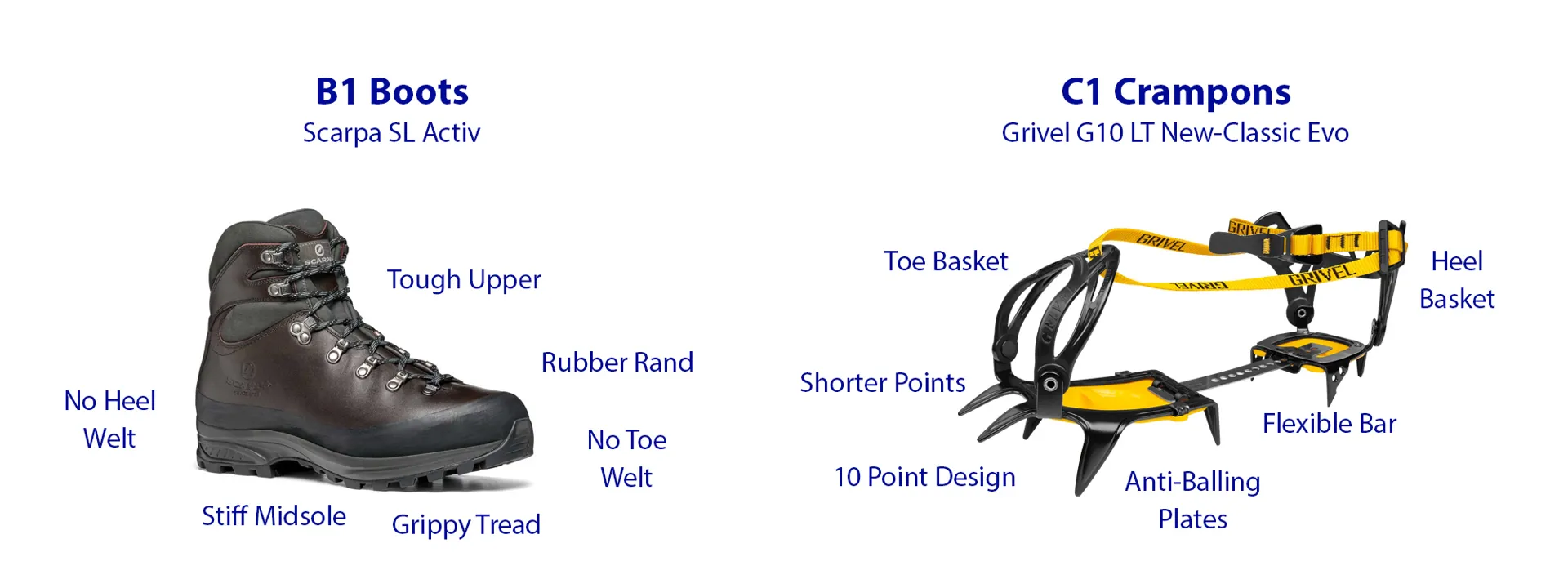
B1 boots have a stiffened sole that still allows some flex while walking. They are designed for general winter mountain use and are compatible with C1 crampons.
C1 crampons usually feature front and rear basket bindings, secured around the boot with straps. This makes them suitable for B1 boots, which don't have the heel welt required by more technical crampon binding systems. C1 crampons are also compatible with many B2 and B3 boots.
Typically featuring 10 points, C1 crampons are designed to provide traction while retaining enough flexibility for a natural walking gait. They are a good choice for snowy mountain paths, winter hillwalking and less technical terrain.
B2 Boots + C2 Crampons
Best for: Winter mountaineering, steeper snow and technical winter routes
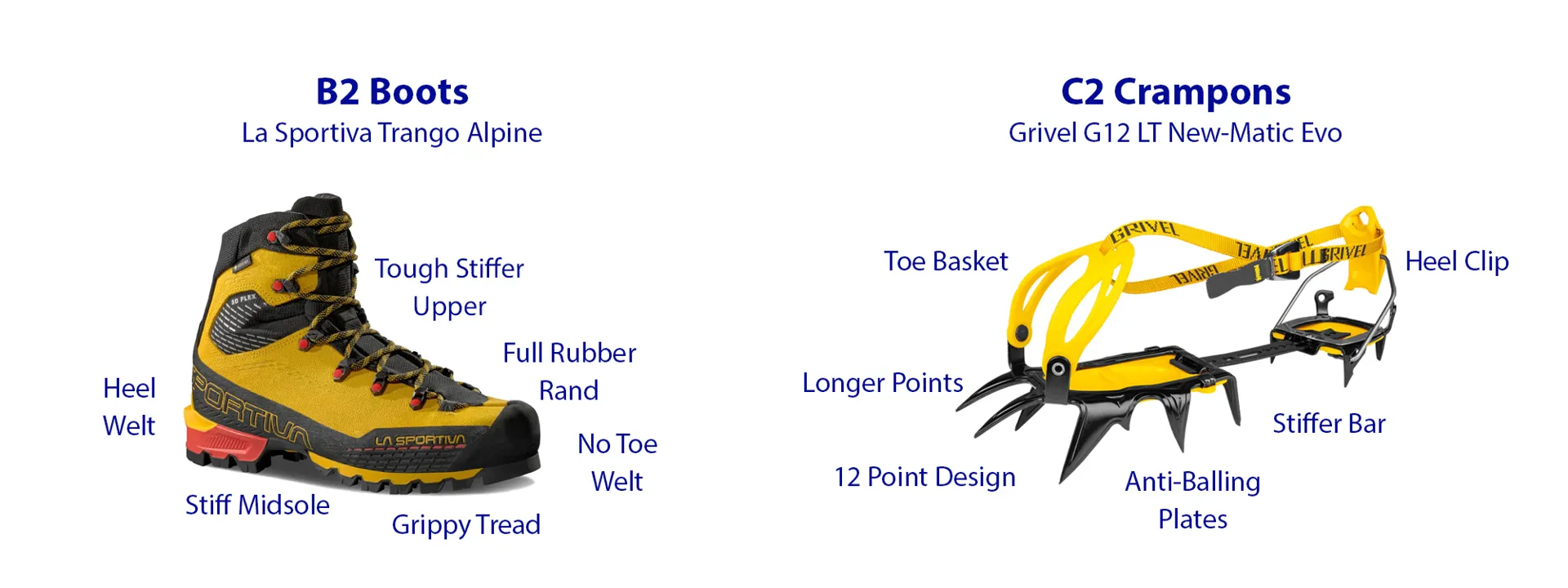
B2 boots have a near-rigid sole and a heel welt. This allows them to accept C2 crampons, which combine a front basket with a rear heel clip.
The heel clip provides a more secure attachment than a traditional basket binding, making C2 crampons suitable for steeper terrain and front-pointing. They are commonly used for winter mountaineering, technical winter scrambles and easier snow and ice climbing.
C2 crampons generally have 12 points, providing additional traction compared with the 10-point configuration commonly found on C1 models. The front points are designed to give greater purchase when tackling steeper terrain.
B3 Boots + C3 Crampons
Best for: Technical mountaineering, ice climbing and mixed climbing
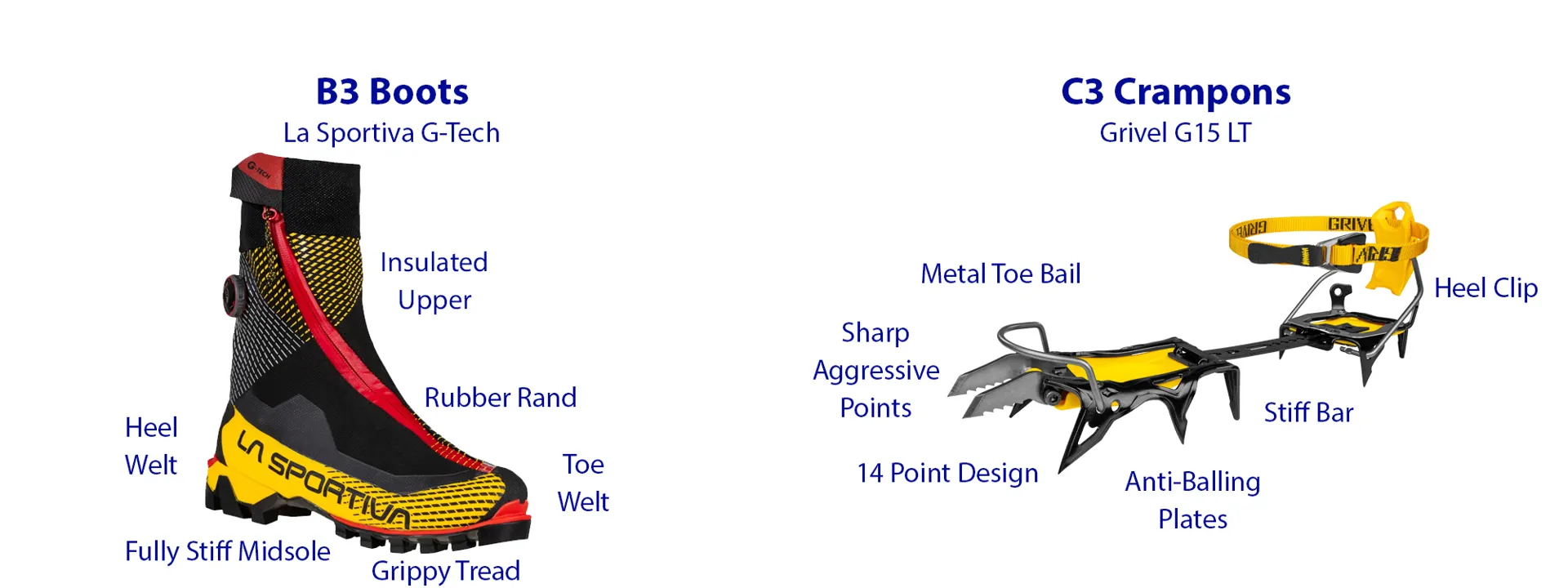
B3 boots have a completely rigid sole with welts at both the front and rear. These are designed to work with C3 crampons, which use a heel clip and front toe bail to create a highly secure connection.
C3 crampons are intended for more technical applications, including ice climbing, technical mountaineering and mixed climbing. Their rigid construction provides the support needed for front-pointing on steep or vertical terrain.
Depending on their intended use, C3 crampons can have 12 or 14 points, with the design and configuration varying according to the demands of the activity.
Choosing the Right Crampon for Your Activity
Think about where and how you intend to use your crampons before choosing a model.
For winter hillwalking, a C1 crampon paired with compatible B1 boots can provide the traction required on snowy and icy terrain. If you're moving onto steeper snow, winter mountaineering or technical scrambles, B2 boots and C2 crampons provide a more secure and supportive setup.
For technical winter climbing, ice climbing or mixed climbing, B3 boots and C3 crampons are designed to provide the rigidity and secure attachment required for steeper terrain.
There are also specialist crampons designed for activities including ski mountaineering, icefall climbing and dry tooling.
Crampon Binding Systems
The binding system is an important part of choosing the right crampon.
Basket bindings use flexible baskets at the front and rear and are associated with C1 crampons. They provide a versatile option for suitable winter walking boots.
Heel clip and toe basket bindings are typically found on C2 crampons. The heel clip attaches to the heel welt of compatible B2 or B3 boots, providing a more secure connection for steeper terrain.
Toe and heel bail systems are used on C3 crampons. These clip directly onto compatible B3 boots with front and rear welts, creating a rigid and secure connection for technical climbing.
How Many Crampon Points Do You Need?
The number of points affects how a crampon performs. 10-point crampons are commonly used for winter walking and less technical terrain, while 12-point crampons provide additional traction for more technical mountaineering.
Technical ice climbing crampons can have 14 points, with the additional points and more aggressive configurations designed for steep terrain and front-pointing.
Anti-Balling Plates
An anti-balling plate sits beneath the crampon and helps prevent snow from compacting underneath your boot. In wet or sticky snow, snow can build up into heavy balls that reduce the effectiveness of the crampon and increase the risk of slipping.
Most modern crampons include anti-balling plates, but it's worth checking before buying.
Crampons or Microspikes?
Microspikes are designed for relatively gentle terrain, compacted snow and icy paths. They are lightweight, easy to fit and can provide useful additional traction on lower-risk routes.
Crampons are built around a more substantial metal frame with larger, more aggressive points. They are designed for steeper snow and ice where a slip could have more serious consequences.
Getting the Right Fit
Not every crampon will fit every boot, even when the B and C ratings appear compatible. Boot shape, sole stiffness, welts, binding style and the condition of the boot can all affect the fit.
Always check that your chosen crampons are compatible with your specific boots and make sure they are securely adjusted before heading into the mountains. Practise fitting them at home first, as putting crampons on in cold, windy conditions while wearing gloves is considerably more difficult.
Walking in crampons also requires a different technique, so if you're new to winter mountaineering, consider learning from an experienced climber or qualified instructor.
Find the Right Crampons for Your Adventure
Whether you're heading out for winter hillwalking, tackling a snowy mountain route or preparing for technical ice climbing, choosing crampons that match your boots and objectives is essential.
At The Climbers Shop and Joe Browns, our experienced team can help you find the right combination of boots, crampons and winter equipment for your next adventure.